Corrugated packaging is an extraordinary recycling success story. Corrugated “cardboard” is recycled more than any other packaging material. Plus, the average corrugated box is made with 52 percent recycled content. The industry’s unwavering commitment to increasing recovery has driven these results. It took a prolonged and focused effort the corrugated industry committed to over fifty years ago and has lived by ever since – that should be viewed as an example to improve recycling rates for other packaging materials. Corrugated is one of few materials that can be recovered for recycling through an established, healthy market and never needs to go to waste. The fiber in old corrugated containers (OCC) is valuable and is in high demand both domestically and overseas.
Most OCC is used to make new paper products. More than 50 percent of OCC recovered in 2019 was used to make new containerboard for more corrugated boxes. An additional 10.4 percent was used to make boxboard (for primary packaging like cereal boxes), and more than 34 percent was exported.
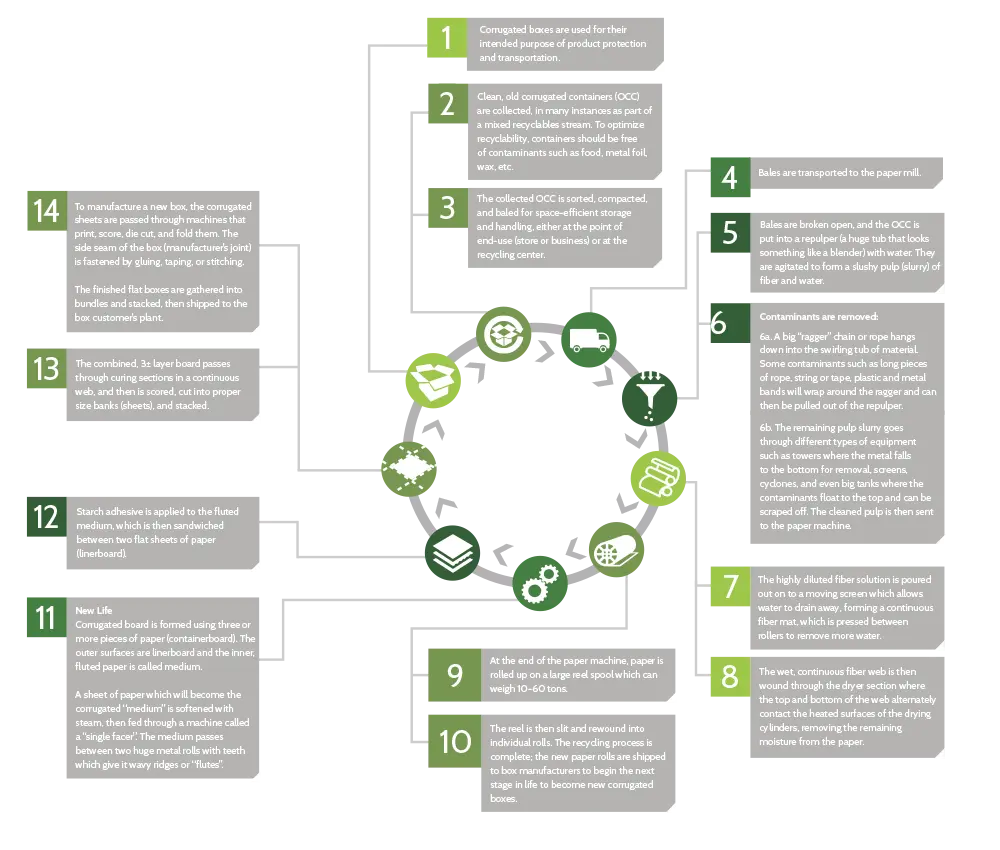
Businesses, retailers and consumers at home collect and return their used corrugated containers to be recycled into new ones. While almost everyone contributes to corrugated’s recycling success, fewer people may know where those boxes go from the collection point, or how they are processed to produce new corrugated material. Here’s how corrugated is recycled: